
Every marketing strategy starts with the same question: who exactly am I talking to, and what makes them buy?
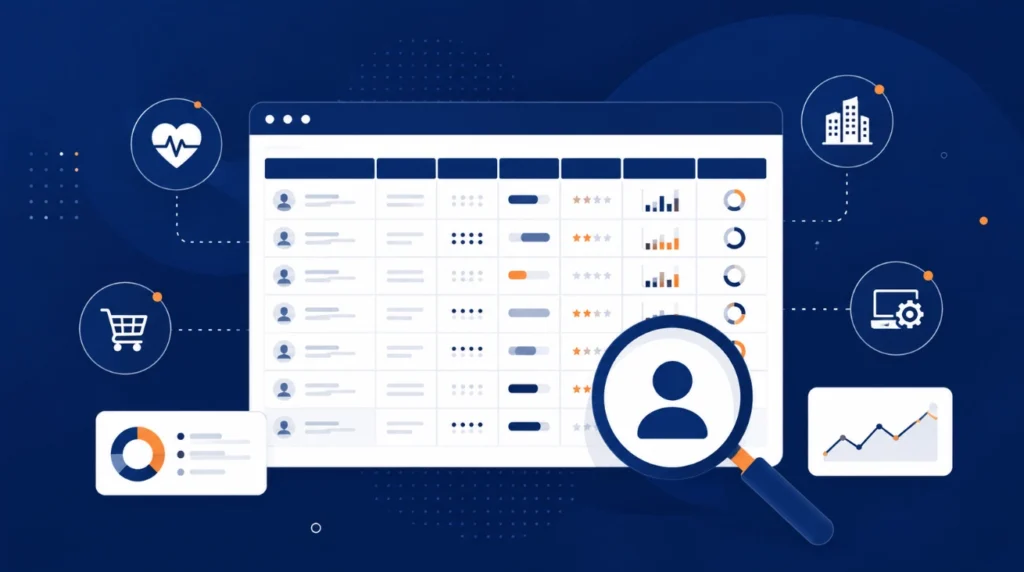
It sounds simple, but answering it properly is the difference between a marketing expert that converts and one that just makes noise without proper results. Most of us answer that question the hard way by digging through scattered notes, old client briefs, competitor research, and half-remembered psychology concepts when every single time we start a new project or take on a new client. It’s slow, it’s repetitive, and half the time the research doesn’t even make it into a usable format. I got tired of rebuilding that foundation from scratch every time, so I sat down and built a proper Customer Research Database for myself. This post is me sharing that result.
This is the Customer Research Database – a single spreadsheet that maps out the target audience, buying psychology, and marketing strategy for 58 different business categories, from clinics and real estate to SaaS, D2C brands, and luxury goods. It’s the kind of resource I wish existed when I started out something you could open on day one of a project and immediately have a working hypothesis about who you’re marketing to and how to reach them.
Why customer research usually gets skipped
If you’ve worked in marketing or run a business for any length of time, you already know the theory: understand your customer, speak to their pain points, meet them where they are. Nobody disagrees with this in principle.
The problem is practical, not conceptual. Proper customer research takes time. Reading forums, running surveys, interviewing customers, studying competitors and most people don’t have that kind of runway before a campaign needs to launch or a client call happens tomorrow morning. So research gets compressed into a five-minute guess, and the strategy built on top of it inherits all of that guesswork.
A structured reference doesn’t replace real research, infact nothing does that. But it gives you a strong, informed starting point instead of a blank page, which is often the difference between doing the research properly and skipping it entirely.
Who this is for
- Marketers and agency folks who need a fast, credible starting point before a client call or a new campaign brief
- Business owners who want to understand their own customer better, without hiring a research firm or spending weeks on it
- Freelancers and consultants who pitch across multiple industries and need to sound informed fast, even in categories they haven’t worked in before
- Students and career-switchers getting into marketing who want to see how research actually connects to strategy, not just theory in a textbook
- Marketers and agency folks who need a fast starting point before a client call or a new campaign brief
- Business owners who want to understand their own customer better, without hiring a research firm
- Freelancers and consultants who pitch across multiple industries and need credibility fast
What’s inside
The file has three sheets, ready to copy into Excel, Google Sheets, Airtable, or Notion:
1. Industries Master DB : 58 business types (education, healthcare, real estate, ecommerce, SaaS, hospitality, luxury, local businesses, and more), each broken down across 50 data points including
- Ideal Customer Profile, age, income, occupation
- Pain points, desires, fears, and objections
- Buying triggers and awareness stage
- Best marketing channels, funnel type, and offer format
- SEO, WhatsApp, email, and retention marketing importance
- KPIs and recommended marketing stack
2. Psychology Triggers : 27 psychological levers (Authority, Scarcity, Social Proof, Loss Aversion, Belonging, and more), mapped to the industries where they work best, with real examples and the channels to use them on.
3. Customer Journey Map : a channel-by-channel breakdown of the customer journey, funnel type, budget allocation, KPIs, and recommended tools/CRM for major business categories.
Altogether, that’s close to 3,000 individual data points, organized so you’re never scrolling through paragraphs of theory to find the one detail you actually need.
How I approached building it
I didn’t want this to be a generic list of “target audience: 25-45, middle income” type entries that you find in most templates online. Every row is built around the actual buying psychology of that industry , what a hospital patient fears versus what a SaaS buyer objects to, why a jeweler purchase is driven by trust and tradition while a cloud kitchen order is pure convenience. Those distinctions matter, because a strategy that works for one will fall flat for the other.
I also made a deliberate choice to keep everything in table format instead of long-form explanations. The goal was something you scan in under a minute, not something you sit down and study like a report. If you’re mid-project and need a quick gut-check on your target audience or the right channel mix, you should be able to get it without reading paragraphs of filler.
Customer Research Database: How to use it
You don’t need to read it front to back. Open the sheet, find your industry (or the closest match), and use it as a starting checklist before you write a strategy, a campaign brief, or a client pitch.
A few practical ways people have used similar frameworks:
- Before a client pitch : pull the pain points, objections, and buying triggers for their industry so your first conversation already sounds informed
- When planning a campaign : check the recommended channels, funnel type, and offer format before you brief a designer or write ad copy
- When training a team member : use it as a quick-reference so new hires understand audience psychology without months of on-the-job learning
- When entering a new niche : get a working hypothesis about the customer before you’ve done a single interview, so your early research has direction
It’s built to save you the first couple of hours of research on any new project that the groundwork stage usually gets rushed the most.
A quick note on limitations
This isn’t a substitute for talking to your actual customers. Every business has quirks that a general framework won’t capture local market conditions, brand positioning, competitor gaps. Think of this as the 80% starting point, not the finished strategy. Use it to move faster into the research that’s specific to your business, not to skip that research altogether.
Get the free download
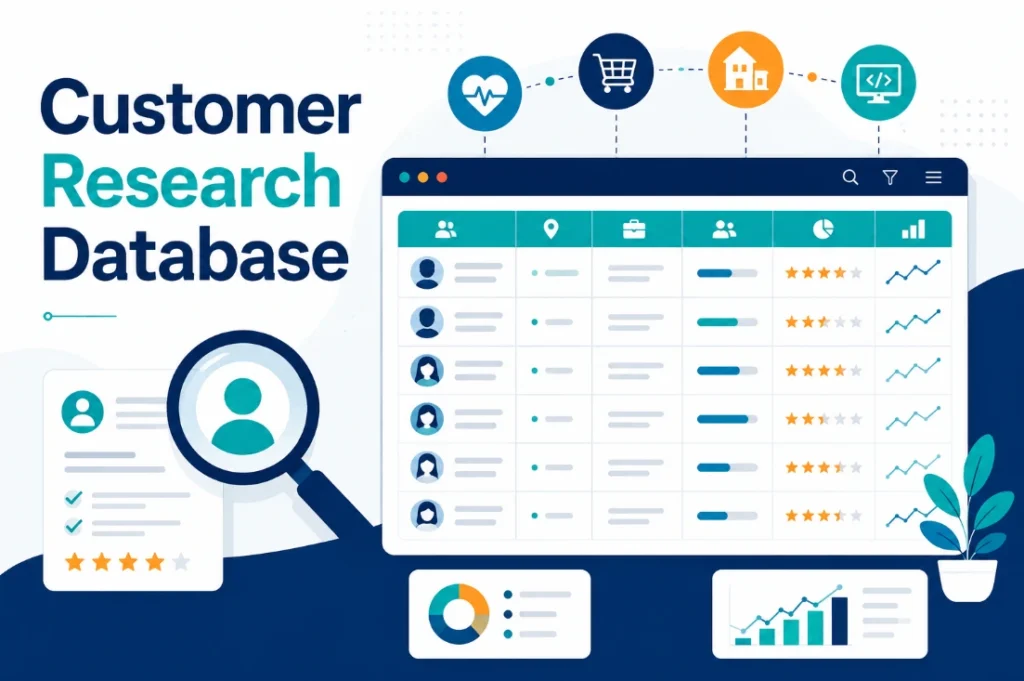
📥 Download the Customer Research Database – free, no strings attached.
If you use it and find something worth adding or improving, I’d love to hear about it , drop a comment or reach out directly.
Building this out further? I’m always refining it based on real project use – follow along for updates.
for read my other blogs, click here